
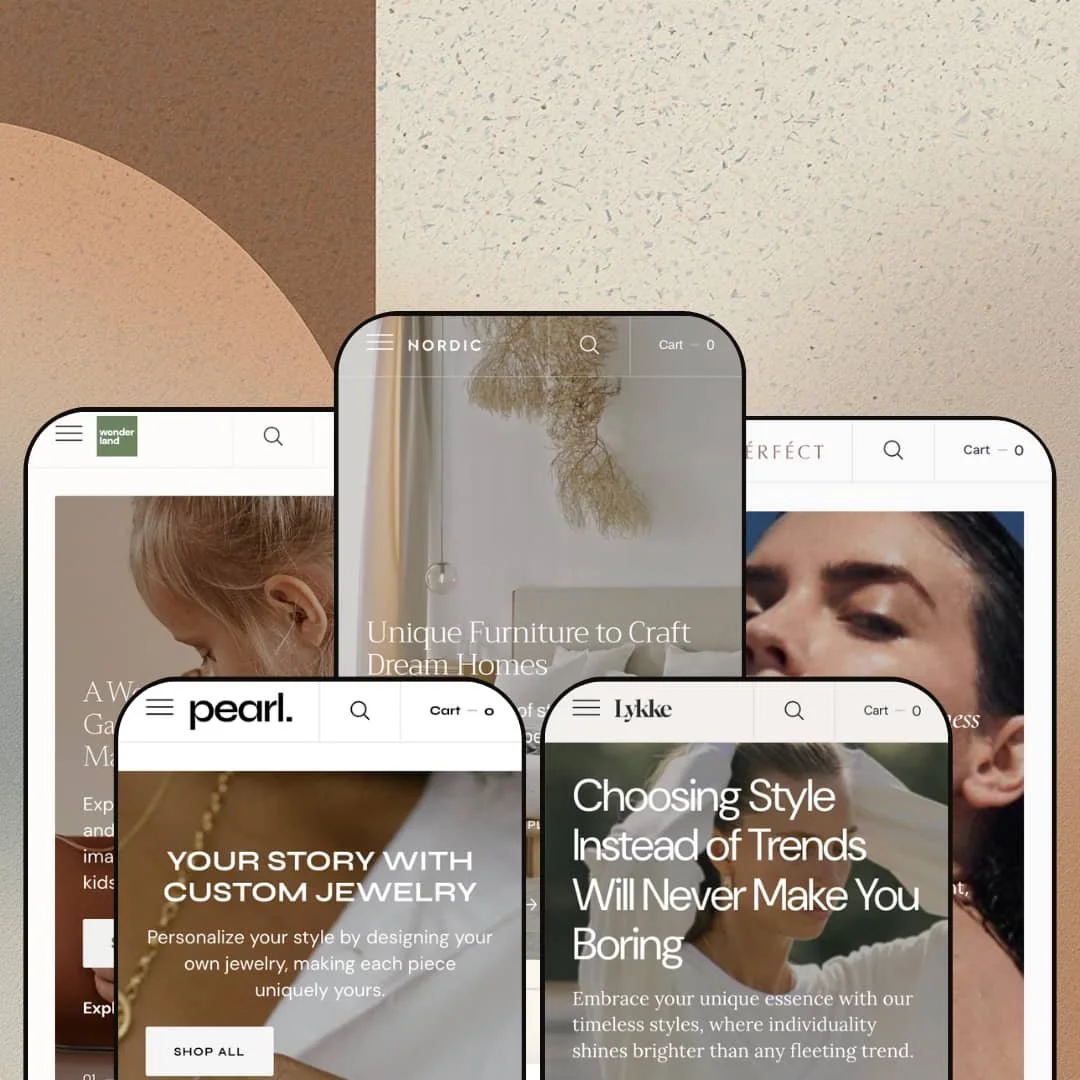
Most themes that bundle five presets stretch a single layout across five industries and trust that swapped photos will hide the seams. Nordic takes the opposite bet: a furniture showroom, a jewelry counter, and a children's shop that each read as composed rather than recolored. Built on Online Store 2.0, it points its whole section library at product storytelling instead of feature-count bragging. Whether that restraint lands as elegant or limiting depends almost entirely on what you sell.
Shoppable lifestyle merchandising baked in
A product-markers section lets a merchant drop clickable hotspots onto a styled image, so a single room shot or flat-lay becomes a set of buyable pins rather than decoration. It turns inspiration into a path to cart. For furniture and jewelry merchants selling considered, higher-ticket pieces that people buy by imagining them in context, this is the section that converts a mood into an order.
A product page built to close, not just display
Where Dawn keeps the product page deliberately plain, Nordic's runs as a coordinated selling surface: a multi-layout gallery, color-swatch variants with per-option pricing, a live "8 in Stock" counter, Care and Shipping accordions, and a "Shop the Look" cross-sell carousel all in one stack. The pieces work together. For repeat-buyer catalogs in the 50-to-200-SKU range, that bundle replaces several small additions a merchant would otherwise wire in by hand.
Sell straight from the homepage
The theme can embed a full product block on the homepage, complete with a variant color picker, quantity stepper, add-to-cart button, and a "20 in Stock" indicator, so a shopper buys without ever loading a product page. It's a real shortcut. For drop-model or single-hero-product brands in food or kids' goods built around one flagship SKU, putting the buy action above the fold removes a click that loses customers.
Five finished verticals from one license
Buy Nordic once at $320 and you get furniture, apparel, beauty, jewelry, and children's storefronts that each arrive styled and stocked, not five tints of the same template. That breadth is the headline value. For agencies and multi-brand operators spinning up several stores, or a solo founder testing which vertical to commit to, the range is a working head-start rather than a mood board.
Storytelling-first, thin on hard data
The section library is built for narrative: image-with-text, collection grids, testimonials, markers. What it doesn't offer is a native comparison or spec table, and the product page keeps technical detail folded inside a single accordion. I kept waiting for a spec table that never came. For electronics, hardware, or B2B merchants with multi-attribute SKUs and buyers who cross-shop on numbers, that absence means living in metafields or an app from day one.
A footer that stays conventional
Across all five presets the footer holds the same three link columns plus an address and a working-hours block, with no option to drag full sections into it. It's tidy and it's fixed. For large-catalog stores past 500 SKUs or multi-brand operators who want a directory-style mega-footer crowded with collections and trust rows, the footer is the one area where the theme's restraint reads as a ceiling rather than a choice.
The design mutes urgency by default
A countdown timer ships in the section library, but the minimalist styling renders it quiet, and the whole visual language is tuned for calm rather than pressure. Calm sells calm. It does not sell panic. Flash-drop and impulse-buy brands whose conversion model runs on visible scarcity and ticking clocks will spend setup time fighting the theme's instinct toward understatement instead of riding it.
What it takes to launch
Plan a full image pass across every preset, since the demo photography is licensed from third-party brands and can't ship live, plus a copy sweep over hero captions, category descriptions, and the placeholder ticker, population of the EU-language UI strings if you sell across the bloc, and replacement of the demo inventory and address boilerplate before launch. Budget two to three days.
-
What works in this preset
A short video loops behind the opening screen, and the furniture sits inside styled rooms instead of floating on a white sweep. That single choice sets the tone. The flagship preset wants you to picture the piece at home, and the lifestyle framing carries through the recommended-products row and the lookbook-style imagery that follows, which reads exactly the way a considered furniture purchase should.
Open the main menu and a four-column category drop appears with two promotional image tiles parked beside the links. It's a genuine merchandising surface, not a list. The slide-out cart reinforces the same idea by tucking a recommended-products carousel under the empty-cart state, so an abandoned visit still gets one more nudge toward a sofa or a side table before the shopper leaves.
Where it stumbles
The second hero slide pivots to "Designed for Outdoor Living and Gardening" while the catalog underneath is indoor sofas, tables, and storage. For the preset carrying the theme's own name, that wobble between living room and patio asks a shopper to figure out the store's lane before the page has earned the right to. A furniture or homeware brand will want to commit the hero to one room and stage the rest accordingly.
-
What works in this preset
Color swatches sit right on the bestseller cards, so a shopper sees the Light pink and White options on a long-sleeve tee before clicking into anything. Variant browsing starts early. For apparel, where a customer often decides on color before silhouette, surfacing the choice at the grid level shortens the path from interest to product page and keeps the catalog feeling alive rather than static.
The homepage keeps unfolding well past the fold. Image banners, an editorial collection-tab block, a four-tile "Shop by Category" row with written descriptions, six named testimonials, and a three-post journal stack up into a full editorial build that gives a fashion merchant somewhere to put a brand story.
I scrolled past the third section and realized the preset is doing something most apparel demos skip: it treats the homepage as a magazine, not a catalog dump. The multicolumn value-prop row near the bottom keeps it grounded. Quiet icons for design, materials, shipping, and support do the reassurance work without shouting over the photography.
-
What works in this preset
Two slides of luxury-beauty imagery open the preset, followed by a clean four-icon row covering green materials, quick delivery, support, and selection. The framing is calm and premium. For a skincare or wellness brand, that restraint is the right instinct, because the category sells trust and ritual, and a quiet hero with an honest icon row reads as confidence rather than noise.
The category logic is sensible for the vertical. Body, Skin, Care, and Wellness split the catalog the way a beauty shopper actually thinks, and the product page leaves room for the ingredient-and-routine storytelling that this audience reads before buying.
Where it stumbles
The demo homepage is staged sparse. Past the hero, the icon row, and a newsletter block, it basically ends. A merchant evaluating Perfect for a beauty launch sees the least-finished story of the five presets and has to imagine most of the build, where Lykke and Pearl hand over a near-complete page. I went looking for the routine sections a skincare store leans on, and the page just stopped.
-
What works in this preset
Pearl wears a different header from its siblings, with a built-in featured-collections panel that floats Rings, Earrings, Bracelets, and Necklaces as captioned image tiles. A three-slide hero follows. It's the fullest deployment of the five, and the jewelry framing, all gold linings and stone selection, shows what the theme can do when a merchant commits the imagery and the copy together.
An on-page FAQ accordion handles custom-design, returns, warranty, and in-store pickup questions without an app in sight. That's the theme's collapsible-content section earning its keep. Jewelry buyers ask a predictable set of questions before a high-value purchase, and answering them inline, halfway down the homepage, removes a reason to bounce to a support page and never come back.
Every product card carries Gold and Silver swatches, and the editorial collection grid below splits New Arrivals into Jewelry Sets, Earrings, and Rings with their own headlines. The dual dark-and-light logo is a small tell that someone thought about contrast across sections. It's the preset I'd point a jewelry merchant to first.
-
What works in this preset
Three hero slides, a value-prop carousel, an image-tab block, a six-logo brand strip, and five journal posts give this kids' preset the warmest, busiest build of the lot. It earns the clutter. A children's store thrives on personality, and the mix of playful copy and dense sections matches how parents browse, which is to say slowly, with a child pulling at their sleeve and a low tolerance for a bare page.
I counted the distinct section types before anything repeated, and the variety held longer here than anywhere else in the family. Color swatches turn up where you'd want them, on the toddler-cup and bed-set cards, and the journal depth gives a kids' brand real surface for the parenting-adjacent content that pulls organic traffic.
One designer's hand across very different stores
The real achievement isn't the preset count, it's the consistency of judgment underneath it. A furniture showroom and a children's shop have no business looking related, yet both feel authored by the same restrained eye, which means a merchant inherits taste, not just a layout, and taste is the part that's hardest to add later.
An identity built around narrative, not numbers
Every architectural decision favors story over density. The homepage wants imagery, captions, and editorial rhythm, and the theme rewards merchants who have a brand worth telling while quietly punishing those who only have a price list. That bias is a strength precisely because it's committed rather than hedged.
Restraint keeps the pages light
The minimalism isn't only aesthetic. Lean section counts on the default homepages and image-led layouts that lazy-load as you go give the storefronts a quick, uncluttered feel, and the calm visual posture means fewer competing elements loading at once.
A narrow aesthetic lane
Nordic does Scandinavian-minimal beautifully and very little else. A maximalist brand, a neon streetwear label, or anything that wants loud, dense, high-contrast energy will be working against the theme's grain at every turn, recoloring and overriding until the thing it bought stops being the thing it wanted.
Five presets, one skeleton
Open three demos side by side and the bones repeat: hero, then categories, then markers, then testimonials, then journal, in roughly that order every time. The vertical changes and the imagery changes, but the underlying rhythm holds, so merchants hoping each preset feels structurally its own will find the differentiation lives mostly in photography and words.
Rating
★ 7.8/10
-
Broad storytelling section library, shoppable markers, and a conversion-aware product page; the gap is data-dense merchandising like native spec or comparison tables.
8
-
Section-based editing with five finished presets as starting points; the main lift is replacing licensed demo imagery and demo copy.
8
-
Slide-out cart, sticky header, and collapsing category menus carry the mobile build, with card layouts that reflow cleanly.
8
-
Lean pages, lazy-loaded imagery, and restrained section counts on the default homepages keep the storefronts feeling quick.
8
-
Strong and confident inside its minimalist lane, noticeably narrower outside it, and the section rhythm is near-identical from preset to preset.
7
Frequently Asked Questions
-
The Nordic preset, which stages indoor furniture in styled rooms with a video hero and a merchandising-rich mega menu. Commit the hero to a single room and it's close to launch-ready.
-
Yes. The Pearl preset deploys the theme's collapsible-content section as a homepage FAQ answering returns, warranty, and custom-order questions, and any preset can run the same block.Produktbeschreibung
-
It does. The product page supports both a stacked gallery and a thumbnail carousel layout, with a multi-image lightbox view on each.
-
Yes, natively. Cards and product pages render color swatches with per-option pricing, shown across the jewelry, apparel, and kids' presets as Gold, Silver, and similar selectors.
-
The theme ships UI string translations for English, French, Italian, German, and Spanish, covering button labels and form text out of the box.
-
Yes. The Nordic preset runs a looping background video in its hero, alongside the standard image-slideshow hero used by the other presets.
This review is based on hands-on testing of the publicly available preset demos of the Nordic Shopify theme as of June 6 2026. Theme features, preset availability, and performance can change with subsequent updates from the theme developer.