
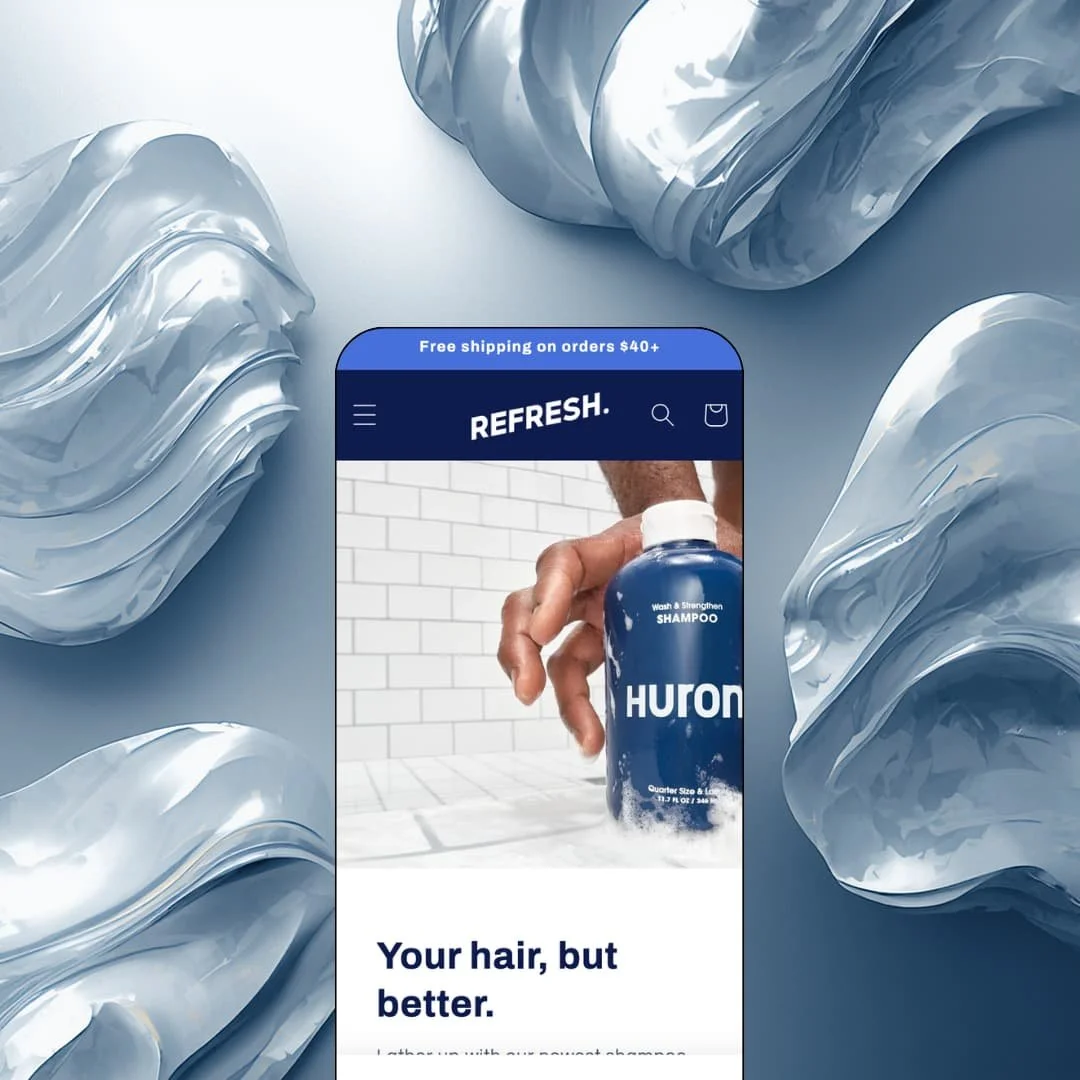
A 36% approval score usually ends a theme conversation before it starts. Refresh, Shopify's own free Online Store 2.0 theme, deserves the conversation anyway, because the brand-storytelling machinery inside it is real and the price is zero. I spent time in the grooming-brand demo checking whether the design earns more trust than the rating suggests. If you're launching an ingredient-led consumable brand without a design budget, keep reading.
Ingredient storytelling is built into the product template
Refresh treats ingredient, usage, and shipping content as first-class product blocks rather than paragraphs crammed into one description field. That matters for consumables. Label-readers get their transparency in organized, collapsible form while the purchase decision stays uncluttered at the top of the page, which is exactly the separation a cautious first-time buyer of skincare or food products wants. For beauty, supplement, and food-and-drink brands with catalogs under 30 SKUs and repeat-purchase customers, this is the core reason to shortlist the theme.
Quick buy and the slide-out cart work as one motion
Sell $12 hair gel and $14 shampoo, and every extra click costs orders. Refresh puts add-to-cart buttons directly on product cards, feeds them into a slide-out drawer with cart notes support, and lets the announcement bar hold a free-shipping threshold in view the whole time so the drawer subtotal has a target to chase. Nobody leaves the page to buy. For budget-priced impulse purchases and restock-driven repeat orders, this is the most commercially useful pairing in the theme.
Dawn-adjacent engine, louder voice
Dawn, Shopify's default free theme, runs the same Online Store 2.0 engine with quieter, utilitarian styling. Refresh takes that identical foundation and dresses it in bold display headings, a minimalist palette, and press-quote and pull-quote sections tuned for brand narrative rather than plain cataloging. You lose nothing structural in the trade. Single-brand operators selling mid-market consumables get a proven engine with an editorial personality already installed.
The section library favors narrative over promotion
The Theme Store's marketing column lists blogs, an FAQ page, promo banners, cross-selling, and recommended products, and that is the entire promotional toolkit. There's no velocity machinery here. Merchants running flash-drop calendars, 500-SKU catalogs, or discount-led fashion assortments will hit the ceiling within a season, because every template assumes patient storytelling instead of urgency-driven selling.
Mega menu panels stay text-only
Link columns, nothing visual. In a February 2026 review reply, Shopify's own team told a merchant asking about the mega menu that collection images inside menu panels mean stepping up to its newer theme generation, which confirms the ceiling straight from the source. Cross-shop-heavy buyers browsing multi-category stores in the 100-plus SKU range lean on imagery in navigation, and Refresh can't hand it to them.
A 36% approval rating across 56 reviews
The Theme Store scorecard reads 36% positive from 56 reviews, split 20 positive, 18 neutral, and 18 negative. Those numbers are ugly. Nothing about a free price tag styles them away. For budget-constrained solo founders publishing a first store without agency backup, that track record is a reason to run a thorough trial-store pass over navigation, cart behavior, and page templates before committing real traffic.
What it takes to launch
Expect a copy-and-photography pass across the hero slides, four collection feature blocks, press-quote slides, and product detail rows, plus navigation re-staging if you switch on the mega menu. A day or two of focused content work gets a small catalog live.
-
What works in this preset
Scrolling the homepage feels closer to a brand film than a storefront. A three-slide hero rolls into a featured-product row, then a rotating set of press quotes from Forbes, GQ, Men's Health, and The Manual, then four full-width image-and-text features that walk you through Hair, Body, Face, and Kits one category at a time. The rhythm is deliberate. Product, proof, category, repeat: it gives a small catalog room to feel considerably bigger than the seven or eight items actually behind each collection link.
The product template splits selling from explaining. The buy box stays lean, with a thumbnail-rail gallery, modal zoom, a pill-style scent picker on the Body Duo, and a quantity stepper, while everything persuasive lives below in a "nitty gritty details" block that unfolds Highlights, Scent, Details, and full ingredient lists. Under that sit a customer pull quote and a three-step routine builder linking sibling products. Smart ordering. For consumables, it matches how people actually decide.
Collection pages keep selling after the grid ends. The Hair collection runs a banner with a description, availability and price filters with a from/to range, a nine-option sort menu, and a bottom drawer that bundles filtering and sorting on mobile. Below the product grid sit two more editorial slots, staged here as a gift-card promo and a featured blog post, which hands merchants a natural home for cross-promotion without disturbing the grid itself.
Where it stumbles
The mega menu never gets a showcase. I went looking for it, and navigation in the demo is four flat collection links plus an About dropdown holding three page links, so the feature sheet's headline discovery tool goes unstaged. Buyers who care about navigation depth have to enable it in a trial store to see what it does.
Same story for swatches, and this kept bugging me. Color swatches and swatch filters sit on the feature list, but a grooming catalog of single-variant blue bottles gives neither one a place to appear, and the only variant picker on display renders as plain text pills. The staging reads against the merchandising features Refresh most needs to prove.
Refresh is Shopify's free answer for brands that sell with words and photography as much as with product grids.
The trade-off is fixed: editorial rhythm comes at the cost of merchandising firepower, and no editor setting converts one into the other. One preset also means one starting point, so every vertical outside men's grooming begins with a full restyle instead of a closer-fitting demo.
Read honestly, it's a launchpad — a zero-cost way for a content-rich small-catalog brand to look intentional on day one and migrate later if velocity selling takes over. Judge it as a starting point rather than a destination, and the free price does its job.
Rating
★ 6.4/10
-
The free kit covers quick buy, a drawer cart, mega menu, size charts, and product video, with ingredient and usage blocks as the standout extras. Depth beyond that belongs to apps.
5
-
A familiar Online Store 2.0 editing model with a restrained settings surface; there's little here a first-time merchant can misconfigure.
8
-
The slide-out menu nests About pages as an accordion, and collections move filtering and sorting into a thumb-reach bottom sheet. Tap targets stay generous throughout.
6
-
Pages run lean: lazy-loaded imagery, restrained script weight, and section counts that stay modest on every template I opened.
8
-
Colors, type, and section order all bend, but the bold-heading editorial voice is baked in. One preset means one starting point.
5
Frequently Asked Questions
-
One. The demo stages a men's grooming catalog, so any other vertical starts with a full restyle from that single baseline.
-
Yes. Version 15.5.0 shipped June 17, 2026, adding standard storefront events support plus a new section and block for product disclosures.
-
Pickup availability is part of the cart-and-checkout feature set, so stores with configured locations can surface local collection as a fulfillment option.
-
Product cards show a strikethrough compare-at price beside the sale price with a "Sale" badge, and the same treatment carries onto the product page.
-
Shopify itself. Requests route through Shopify's standard help channels rather than a third-party developer desk, and documentation lives in the main theme manual.
-
Yes. The feature set includes product video support, and product imagery opens full-screen for close inspection of packaging and label detail.
-
Size chart support ships in the merchandising feature set, which becomes useful if you extend past consumables into apparel or accessories.
This review is based on hands-on testing of the publicly available preset demos of the Refresh Shopify theme as of August 2026. Theme features, preset availability, and performance can change with subsequent updates from the theme developer.