
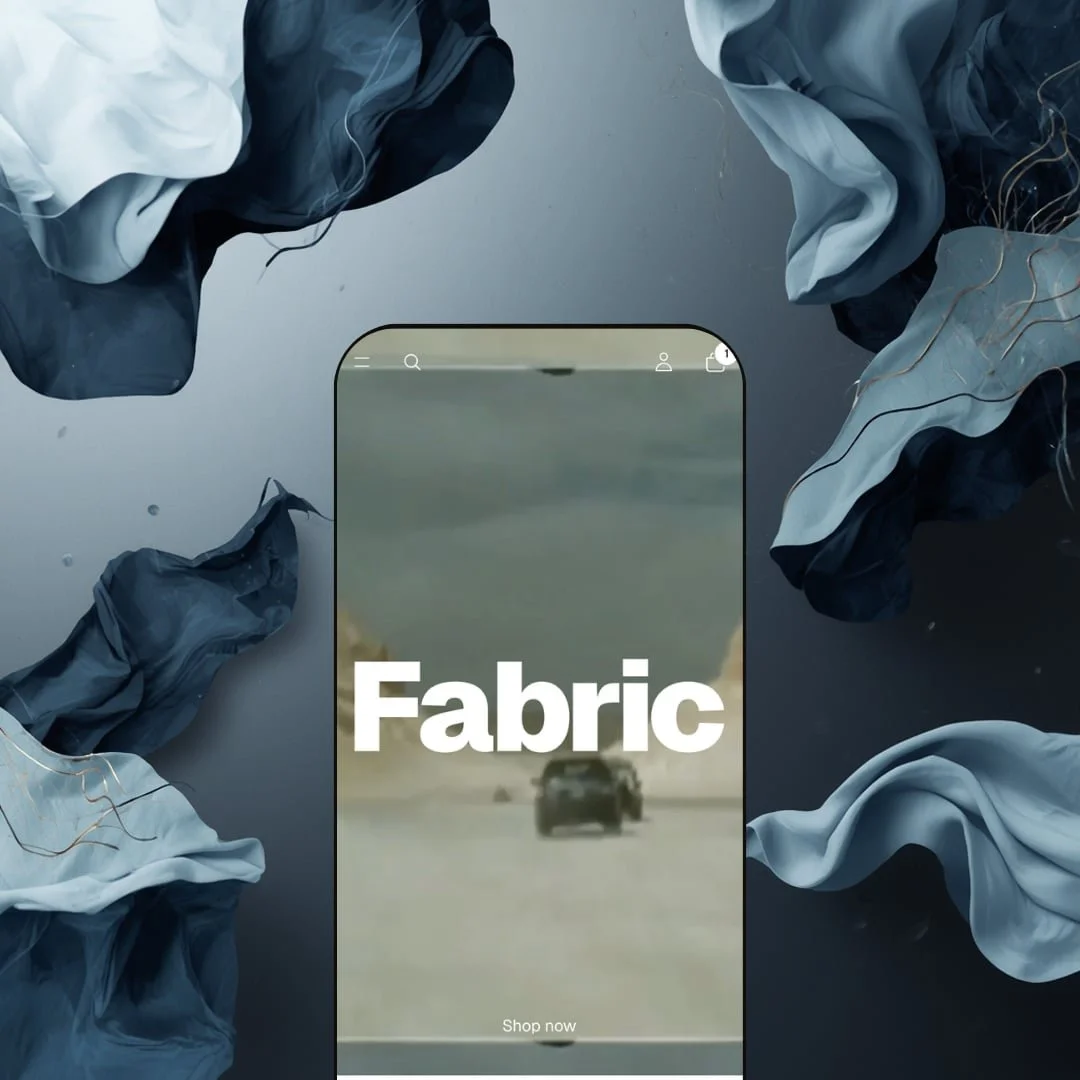
A free Shopify theme that opens with a cinematic video hero and a mega menu you'd expect from a $300 paid option? That's Fabric. It's Shopify's own Horizon-generation theme, and it's betting hard on the idea that lifestyle brands shouldn't have to pay a premium just to look like one. The feature list is stacked: lookbook sections, predictive search, quick buy, color swatches, nested theme blocks, native video embeds. But a 30% approval rating on the Theme Store tells you this story has two sides. Let's dig into what actually works and where it falls short.
Pros
The mega menu is genuinely best-in-class for a free theme
Each top-level nav item expands into a panel that pairs subcategory text links with full-bleed collection images and featured thumbnails. It gives shoppers a visual reason to dig into deeper categories rather than hovering over a wall of text links. I've tested paid themes at $300+ that don't do navigation this well.
Quick buy adapts intelligently to product complexity
Product cards use a dual-button system: simple items get an "Add" button for direct cart addition, while multi-variant products show "Choose" and route to the product page for proper selection. It's a small detail, but it prevents the classic frustration of accidentally carting the wrong size or color. The system works consistently across the catalog without any merchant configuration.
The product page experience punches well above the theme's price
The Tefnut Beach Vest renders 14 high-resolution images with numbered pagination and a full-screen viewer. A sticky add-to-cart bar follows you down the page showing a thumbnail, the selected variant, and the price. Accordion tabs for Product Details, Fabric Care, and Size & Fit keep everything organized without turning the page into an endless scroll. It's the kind of PDP you expect from a premium theme, and here it's free.
Predictive search works as a discovery shortcut
Click the search icon and before you've typed anything, a full-width overlay surfaces a "Best Sellers" grid with product thumbnails, hover images, and sale pricing. It turns a utility feature into a genuine browsing moment. Returning visitors and casual shoppers get an instant path to popular items without navigating anywhere.
Editorial sections give you storytelling tools most free themes skip
Video heroes, lookbook galleries, brand storytelling video blocks, and rich-text sections with image pairings are all available as theme-level capabilities. You can build a homepage that reads more like a curated editorial than a standard ecommerce page. That kind of layout flexibility is typically locked behind paid themes in the $250+ range.
Cons
Collection grid cards don't show inline color swatches
Browsing the Womenswear collection, which spans 97 items across five pages, I could see product names and prices on each card but nothing about available colorways. Want to know if that crew neck comes in Olive or just Black? Click through to the PDP. For a theme that's clearly built around clothing with color-driven SKUs, this is real friction. A swatch row on each card would save shoppers a lot of back-and-forth.
No breadcrumb navigation on product pages
Landing on the Tefnut Beach Vest from a collection, there's no breadcrumb trail back. If you arrived via search or a shared link, you have no orientation cues. You're just... on a product page. Getting back to related products means using the browser back button or the main nav, which feels like a step backward for a theme this polished everywhere else.
Merchant reviews tell a cautionary story
Fabric currently sits at 30% positive across 46 reviews on the Shopify Theme Store. Merchants have flagged hero image container scaling issues, Safari rendering problems on older iOS devices, and difficulty customizing the cart page. The developer has acknowledged these reports and indicated active work on fixes. But if you're planning to deviate heavily from the defaults, budget some troubleshooting time. The theme is still finding its legs.
-
The Fabric preset is staged as a contemporary clothing and homeware brand. Think muted blacks, deep olives, sand tones. The whole aesthetic bets on the idea that if you have strong photography, the best thing the theme can do is get out of the way. It's a confident bet.
What works in this preset
The video hero is genuinely cinematic. I don't say that lightly. Most free themes that attempt video heroes end up with something that feels like a PowerPoint transition. Fabric's preset opens with a dark, autoplay loop overlaid with a large serif logo watermark and a single "Shop now" button. It reads more like the landing page for a fashion house than a Shopify store. The staging commits fully to the mood, and it works. You feel like you've arrived somewhere, not just loaded a website.
The lookbook gallery earns its homepage real estate. Right below the hero, four lifestyle images sit in a horizontal row labeled "New this season." It's a simple concept, but the execution matters. In this preset demo, the lookbook breaks the predictable grid rhythm and gives the homepage a pace that alternates between discovery and commerce. I found myself actually pausing here rather than scrolling past. That's the whole point.
The color palette does serious heavy lifting. Warm blacks, olives, cream backgrounds, sand tones. Nothing fights for attention. Typography stays quiet and functional, and the result is that the product and lifestyle images carry all the visual weight. There's zero decorative clutter. For a free theme, this level of restraint is unusual and it makes the store feel more expensive than it is.
The homepage flow keeps you scrolling. Video hero, lookbook gallery, collection cards, brand video, product grid, rich-text brand statement with a flat-lay image. Each section transitions smoothly into the next, and the variety prevents scroll fatigue. I noticed I kept exploring rather than bouncing, which tells you the pacing is doing its job. The homepage doesn't rush you toward a single CTA. It rewards the scroll.
Where it stumbles
The cross-sell section on the product page is a missed opportunity. Below the product details on the Tefnut Beach Vest, the "Related items" area shows tiles for Menswear, Womenswear, Home, and Sale. Not products. Collections. So if I just looked at a beach vest and I'm ready to add matching shorts, I have to click into an entire collection to find them. It's an extra step that shouldn't exist. In this demo staging, the most valuable real estate on the product page feels like a dead end.
The blog looks like an afterthought. The "Stories" section functions fine, but walk from the homepage or the Our Story page into the blog and the drop in visual polish is obvious. For brands that treat content as a traffic driver, this gap will need work. It's not broken, it's just noticeably less finished than everything around it.
Niche Suitability
-
Lifestyle apparel and homeware brands that already invest in professional photography and want a storefront that feels like a brand world, not a product catalog. If you've got the imagery to fill a video hero, a lookbook, and 14-image product galleries, Fabric will make it sing. The earthy editorial staging suits DTC clothing lines, ethical fashion brands, and curated homeware stores.
Not Ideal For
-
Stores where the primary shopping behavior is rapid visual comparison at the collection level. If your catalog has dozens of colorways per product and shoppers need to see swatch options without clicking into every single PDP, you'll feel the friction. Also a harder sell for brands that rely on blog content as a core acquisition channel and need that section to match the rest of the theme right out of the box.
Final Recommendation
-
Small-to-medium apparel and lifestyle brands that have strong photography, care about brand storytelling, and want a free starting point that looks like it cost money. Fabric is tailor-made for merchants launching a new DTC line who need editorial-quality presentation, a deep product page experience, and a polished mega menu without paying for a premium theme.
-
Merchants running large catalogs with hundreds of color variants who need fast swatch-based browsing from the collection grid. Also stores that depend on individual product recommendations for cross-selling from the PDP, or merchants who need a theme with a proven stability track record and strong community confidence behind it.
-
Medium. The defaults are polished enough for a clean launch, and you won't need to wrestle with the basics. But you'll likely want to customize the product page cross-sell sections, and you should be ready for the hero scaling quirks and browser-specific issues that merchants have flagged in reviews.
★ 7.2/10
Rating
-
Impressive for a free theme. Quick buy, mega menu, slide-out cart, predictive search, video sections, and lookbooks all work well. The collection sidebar presents Shopify's standard filter options cleanly with color names, price range, and availability.
7
-
Single preset keeps initial setup simple. Horizon-era nested blocks give you real flexibility, but configuring sections like cross-sell and dialing in the hero behavior will take some time.
7
-
Navigation collapses into a clean drawer menu. Product cards, image galleries, and the slide-out cart all render properly on touch. The sticky add-to-cart bar scales down to smaller screens without losing functionality.
7
-
Felt fast throughout testing. The video hero loaded without stutter, 14-image galleries rendered smoothly, and the predictive search overlay appeared the instant I clicked. Animations are subtle and never block interaction.
7
-
Nested blocks, video sections, lookbook grids, and a versatile mega menu give merchants real layout control. The editorial aesthetic flexes across clothing, homeware, and lifestyle niches without feeling pigeonholed.
8
-
👑 It's built for exactly that. The demo stages a full clothing and homeware store with Womenswear, Menswear, and Home collections, and features like the lookbook gallery, model-detail captions noting height and fit, and color swatches all cater specifically to apparel merchandising.
-
📱Navigation collapses into a drawer menu, product grids reflow cleanly, and the slide-out cart works on touch without hiccups. The sticky add-to-cart bar on the Tefnut Beach Vest product page adapted to narrower viewports and stayed accessible while I scrolled through all 14 product images.
-
🎨 A lot, for a free theme. Fabric supports Horizon-generation nested theme blocks, which means granular control over layout composition. Video heroes, lookbook sections, mega menu imagery, collection cards, and rich text blocks all give you surfaces to build out brand identity. Typography is fully self-serve through the editor.
-
⚡During testing, the video hero loaded without stutter, the 14-image product gallery rendered quickly, and the predictive search overlay appeared the moment I clicked the icon. Animations throughout are restrained and never got in the way of actually using the store.
-
👕 On the product page, color swatches swap the entire image gallery when clicked, and size selectors render as individual buttons from XXS through XL. The dual Add/Choose system on collection cards routes single-variant items to direct cart addition and multi-variant products to the PDP for proper selection, which keeps the flow clean.
-
🔎 Fabric follows Shopify's standard SEO structure with clean URLs, proper heading hierarchy, and editable title and meta fields. The FAQ page, blog, and content pages like Our Story and Materials & Care all provide additional indexable surfaces. Product image alt text pulls from model and product descriptions.
-
💱 The official feature list includes EU translations for English, French, Italian, German, and Spanish as pre-translated theme strings. Multi-language and multi-currency switching is handled through Shopify Markets at the platform level, and merchants configure these options through their Shopify admin.
-
⚙️ Fabric follows Shopify's standard app integration patterns. It supports cart notes, in-store pickups, pre-order functionality, and Sign in with Shop, all of which tie into the broader app ecosystem. The slide-out cart and standard checkout flow should play nicely with most major apps.
-
🛒 It's free. There's literally no financial barrier. Install it from the Shopify Theme Store, customize in the editor, and publish when you're ready. The live demo at theme-fabric-demo.myshopify.com lets you click through everything before you even install.
This review is based on hands-on testing of the publicly available preset demos of the Fabric Shopify theme as of April 2026. Theme features, preset availability, and performance can change with subsequent updates from the theme developer.